By WE ARE NAVIGATORS Editorial | 28 September 2026
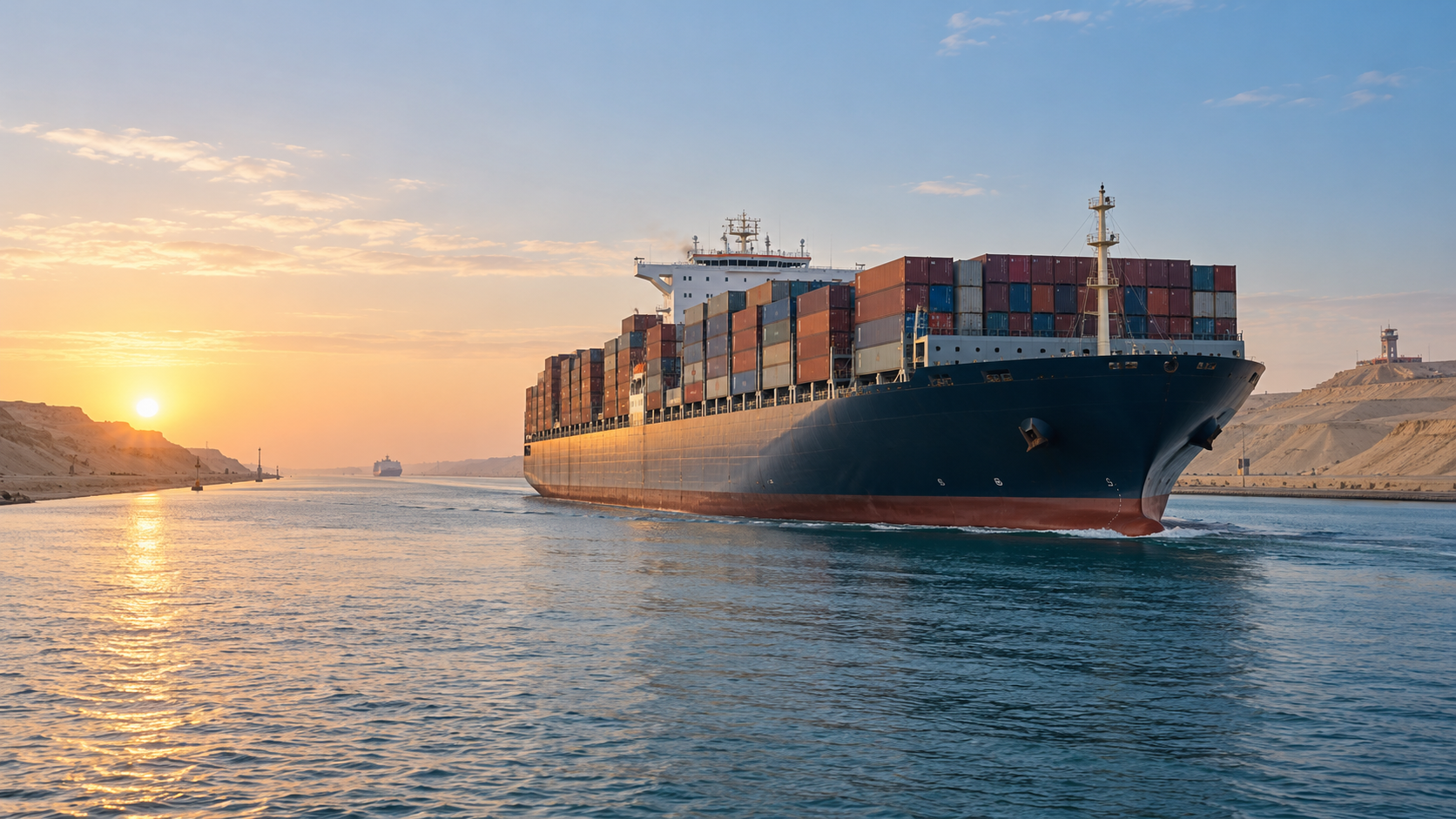
For a container ship sailing between Asia and Europe, the Suez Canal offers the direct passage between the Red Sea and the Mediterranean. The alternative, sailing around the Cape of Good Hope, adds distance and time to the voyage.
That is why the latest return of services through Suez has caught the industry's attention. On 14 September, Maersk said four additional services operated with Hapag-Lloyd would move back to the trans-Suez corridor. The companies said the change would offer more efficient transit times, while also making future service decisions dependent on the security situation in the region.
The decision is a reminder that a route can look straightforward on a chart while remaining complicated in practice. Transit time matters. So do vessel schedules, fuel use, cargo commitments and the security situation in the waters the route passes through.
A changing picture at sea
The renewed Suez transits are taking place against a serious security backdrop. On 16 September, the International Maritime Organization said it had verified 80 attacks on merchant vessels in and around the Strait of Hormuz since the Middle East conflict began on 28 February, with at least 22 seafarers killed. The IMO also reported that attacks in the Red Sea had resumed, including an attack on 11 August in which four seafarers died.
The IMO's update sets out the verified figures and its call to protect merchant ships and crews.
These figures describe reported attacks across the wider region; they do not, by themselves, determine the risk on any particular voyage. Conditions can differ by location and change over time. That is why operators must keep reviewing reliable, current information and their own risk assessments as a voyage develops.
For crews, the uncertainty is not abstract. A change of route may affect arrival dates, watchkeeping routines, time alongside and the timing of crew changes. If plans shift, clear communication between the ship, its operator, agents and the people waiting at the next port becomes especially important.
A decision that reaches beyond the ship
When a vessel takes a longer route, the effects can ripple through the supply chain: arrival windows move, connecting port calls may need adjustment, and cargo owners may have to revise expectations. A shorter route can help recover time, but schedule efficiency cannot be considered on its own.
The recent announcements also show why it is useful to distinguish a gradual return from a full return to normal. Maersk said the additional services would use Suez, while also saying that future changes would depend on the absence of escalation. The route decision remains subject to continuing review.
That is a reasonable position. It reflects the reality that the security situation in the Red Sea and Gulf of Aden has not been resolved. It has changed, and in some respects improved, but it has not been resolved.
What this means for seafarers
For seafarers, the return of services through Suez is not simply a commercial development. It means that more vessels will be transiting a corridor that has seen serious security incidents over the past two years.
That does not mean every transit will be dangerous. It does mean that crews should be properly briefed, that security plans should be current and understood, and that the people on watch should know what to do if a situation develops.
It also means that seafarers have a right to clear information from their operators about the security situation on the routes they are asked to sail. The decision to transit a high-risk area is not made on the bridge alone.
WE ARE NAVIGATORS will continue to monitor developments in the Red Sea, Gulf of Aden and Strait of Hormuz and provide updates as the situation evolves.
