WE ARE NAVIGATORS — Underwater Services

Robotic hull grooming & underwater inspection

WAN coordinates robotic hull grooming and underwater visual inspection through specialist providers. The method and scope are confirmed after reviewing vessel suitability, location and operating requirements.

Ship propeller and rudder photographed underwater — underwater hull inspection

What we need to assess your requirement

Vessel details

Vessel name, type, flag, LOA, beam and draught. Current antifouling coating type and last dry-docking date if known.

Location

Port or anchorage where the work is required. Country and port authority jurisdiction — some locations prohibit in-water cleaning.

Scope of work

Whether you require visual inspection only, hull grooming, or both. Any specific areas of concern (sea chests, propeller, rudder).

Timing

Intended date or window for the work, and whether the vessel will be at anchor, alongside or at a buoy.

Services coordinated

Underwater services

Robotic Underwater Visual Inspection

Remotely operated vehicles (ROVs) and underwater drones can conduct visual inspections of hull plating, sea chests, propeller, rudder, shaft and other underwater structures without requiring dry-docking or diver deployment. Inspection footage and still imagery are compiled into a structured report for the vessel operator, P&I club or surveyor.

  • Hull plating, weld seams and coating condition assessment
  • Sea chest, propeller, rudder and shaft visual inspection
  • Structured inspection report with imagery and findings
  • Suitable for pre-purchase, condition, off-hire and P&I purposes
  • Reduces or eliminates the need for diver deployment in many cases

Suitability depends on water visibility, port regulations, vessel draught and the scope of inspection required. WAN will assess feasibility based on your vessel details and location.
Cavitation-Based Hull Grooming

Cavitation-based hull grooming uses controlled hydrodynamic cavitation to remove soft biofouling from hull surfaces without abrasive contact. This approach is intended to maintain hull cleanliness between dry-dockings, supporting fuel efficiency and reducing the risk of invasive species transfer.

  • Removal of soft biofouling (slime, algae, early-stage growth)
  • Non-contact process — no abrasive pads or brushes on the coating
  • Supports fuel efficiency by maintaining hull smoothness
  • Reduces invasive species transfer risk between ports
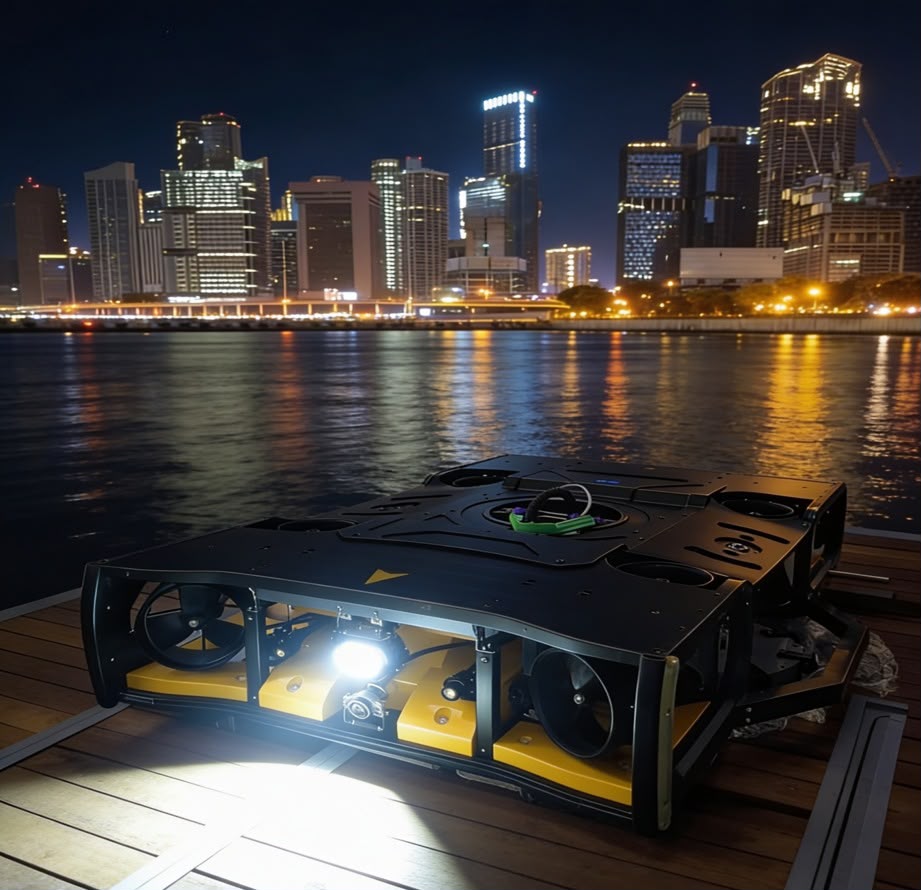
Oceanis Robotics Merlion Jet4 remotely operated underwater robot for hull cleaning and inspection

In partnership with Oceanis Robotics

Robotic Hull Cleaning

Robotic hull cleaning uses a remotely operated underwater robot to remove marine growth from a vessel's hull. A cleaner hull can help reduce drag and support fuel efficiency. WE ARE NAVIGATORS connects vessel operators with Oceanis Robotics to assess suitable inspection and cleaning options, subject to vessel condition, coating compatibility, local permissions and service availability.

Enquire About Hull Cleaning

Important considerations

Suitability is assessed case by case

Hull grooming and underwater inspection services are not universally applicable. The following factors affect whether a service can be carried out and what approach is appropriate.

Fouling type and severity

Cavitation grooming is most effective on soft, early-stage biofouling. Hard fouling — barnacles, tubeworms and established calcareous growth — typically requires mechanical removal or dry-docking. WAN will assess fouling condition as part of the suitability review.

Coating compatibility

Not all antifouling coatings are compatible with cavitation grooming. Certain self-polishing copolymer (SPC) and biocide-free coatings may be affected. The coating type, age and condition must be confirmed before grooming is carried out.

Port and location restrictions

In-water hull cleaning is subject to port authority approval and local environmental regulations. Some ports and jurisdictions prohibit or restrict in-water cleaning due to concerns about biofouling discharge. Regulatory clearance must be confirmed for the intended location.

Operating restrictions

Grooming operations require the vessel to be at anchor or alongside with minimal movement. Sea state, tidal conditions and vessel draught affect operational feasibility. These factors are assessed on a case-by-case basis.

Ready to discuss your vessel?

Send us your vessel details, location and scope of work. WAN will assess feasibility with our specialist partners and come back to you with a clear picture of what is possible and what is required.